Junk Food Watercolor Clipart 24 PNG: An Embroidery Review
As a professional embroidery digitizer and product reviewer, I approach every new graphic asset with a specific question: will this actually stitch out well, or is it just a pretty picture on a screen? When evaluating the Junk Food Watercolor Clipart 24 PNG, my assessment goes beyond the aesthetic appeal of the illustration itself. I am looking at line clarity, color separation potential, and how the watercolor texture translates into thread. For fellow makers, Etsy sellers, and apparel decorators, understanding the bridge between digital art and physical stitches is the difference between a frustrating unpicking session and a best-selling handmade product.
First Impressions and Visual Personality
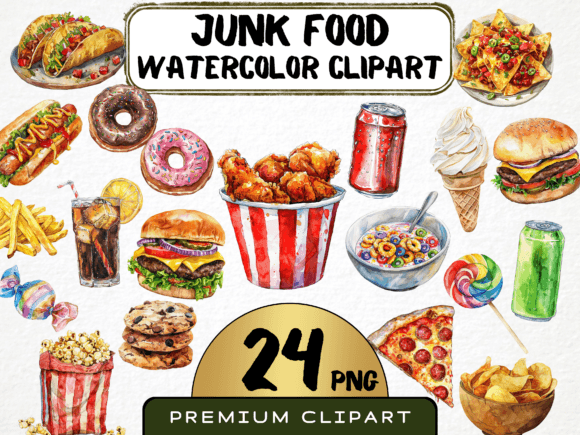
My initial reaction to this collection is that it captures a nostalgic, playful mood perfectly. The "junk food" theme inherently suggests fun, casual wear, and retro vibes. As an illustration, the watercolor style offers soft edges and organic blending that feels human and artistic rather than rigid or corporate. This visual personality makes it an excellent candidate for custom apparel and personalized gifts where the goal is to evoke warmth and humor.
However, from a technical embroidery perspective, watercolor presents unique challenges. The soft gradients and undefined edges seen in the PNG files require careful interpretation during digitizing. Unlike vector art with hard lines, these illustrations rely on color layering to create depth. For a machine embroidery design, this means we cannot simply auto-digitize. We must decide whether to replicate the painterly effect with complex fill stitches or to stylize the design into cleaner blocks of color that read better as an embroidered patch or sweatshirt embroidery.
Real-World Application: The Custom Tote Bag Test
To truly evaluate the utility of Junk Food Watercolor Clipart 24 PNG, I mentally prototyped a project I frequently get requests for: a canvas tote bag featuring a retro burger and fries motif. Canvas is a textured fabric, which can sometimes swallow fine details. In this scenario, the bold shapes within the clipart are a major advantage. The distinct silhouettes of junk food items allow for clear satin stitch borders or running stitch outlines that define the image against the fabric texture.
If I were creating this tote bag for a craft business or small shop product, I would likely use the clipart as a base for an applique design. The watercolor shading could be simulated by using variegated thread colors over a solid fabric applique, rather than trying to stitch thousands of density-heavy fill stitches to mimic paint. This approach keeps the stitch count manageable and prevents the tote bag from becoming stiff or bulletproof. For customers browsing Etsy listings, seeing this design rendered with visible fabric texture in a printable mockup helps set accurate expectations for the finished product.
Navigating Fabric Choices and Stabilizer Needs
While the design shines on stable substrates like canvas or denim, caution is required when applying Junk Food Watercolor Clipart 24 PNG to more difficult materials. If you are planning baby embroidery on stretchy interlock cotton or ribbed knits, the organic nature of watercolor edges can become distorted if the stabilizer is insufficient. I always recommend testing on scrap fabric first. For stretchy garments, a cut-away stabilizer is non-negotiable to maintain the integrity of the design shape after washing.
Dark fabrics present another consideration. Watercolor illustrations often rely on white space and light transparency. On a black sweatshirt or navy cap, those subtle highlights disappear unless you add an underlay or a white base layer. When reviewing this clipart for commercial embroidery projects on dark goods, ask yourself if the design has enough contrast to stand alone. You may need to adjust thread colors significantly from the original PNG palette to ensure visibility and customer satisfaction.
Technical Considerations for Digitizers and Makers
For those converting these illustrations into a digital embroidery file, detail management is critical. Watercolor art often includes splatters, drips, and thin brush strokes that look beautiful at 300 DPI but are impossible to stitch. Before you begin digitizing, simplify the artwork. Remove micro-details that would result in tiny jump stitches or excessive trims. Focus on the main color fields and defining outlines.
- Stitch Density: Avoid over-densifying areas where colors blend. Use lighter fill stitches or cross-hatching to suggest watercolor texture without causing puckering.
- Hoop Size Verification: Always confirm your hoop size limits before finalizing placement. These illustrations vary in aspect ratio; resizing a watercolor design too much can distort the intended proportions.
- Thread Color Contrast: Test your palette on actual fabric swatches. Screen brightness often deceives us regarding how thread colors interact with fabric grain.
- Licensing Check: Before selling any finished product or digital assets derived from this clipart, verify the specific license terms. Ensure you have commercial rights for both physical items and digital previews.
Elevating Product Value and Brand Consistency
Using high-quality illustrations like Junk Food Watercolor Clipart 24 PNG can significantly enhance the perceived value of your handmade products. In a saturated market, generic clipart stands out negatively. Artistic, cohesive designs signal professionalism and care. Whether you are making holiday embroidery for seasonal markets or year-round boutique branding, maintaining a consistent visual style builds buyer trust.
When presenting these designs to clients or customers, honesty about the translation from screen to stitch is vital. Use black and white mockups alongside color versions to show structure. Explain that embroidery has a tactile quality that differs from print. This education manages expectations and reduces returns. For creative entrepreneurs, treating this clipart not just as a decoration but as a foundational design asset allows for versatile product lines—from embroidered patches for denim jackets to nursery decor pillows—while maintaining a recognizable brand identity.
Final Practical Advice for Successful Stitch-Outs
Ultimately, Junk Food Watercolor Clipart 24 PNG offers a fantastic foundation for creative embroidery projects, provided it is handled with technical respect. Do not rush the digitizing process. Take the time to map out stitch directions that follow the flow of the original brushwork. Inspect small lettering or intricate corners closely; if they are too small to stitch clearly, edit them out or enlarge them. A clean, readable design is always superior to a detailed mess.
Remember that your reputation as an Etsy seller or apparel decorator rests on the quality of the finished product. By combining the artistic charm of these illustrations with rigorous testing and proper stabilization techniques, you transform a simple PNG file into a tangible, sellable item that customers will cherish. Always prioritize test sew-outs over assumptions, and let the practical realities of thread and fabric guide your creative decisions.