Watercolor Safari Sublimation Clipart Review
As a designer who bridges the gap between digital assets and tangible textiles, I approach every new graphic collection with a specific question: will this actually translate to thread? When evaluating Watercolor Safari Sublimation Clipart, my perspective shifts from pure illustration appreciation to technical embroidery feasibility. While these files are marketed for sublimation, their soft edges, organic shapes, and whimsical animal motifs make them compelling candidates for mixed-media projects and digitizing inspiration. For Etsy sellers and small shop owners, understanding how these illustrations behave in a production environment is the difference between a bestseller and a stitch-out failure.
First Impressions: Mood and Visual Personality
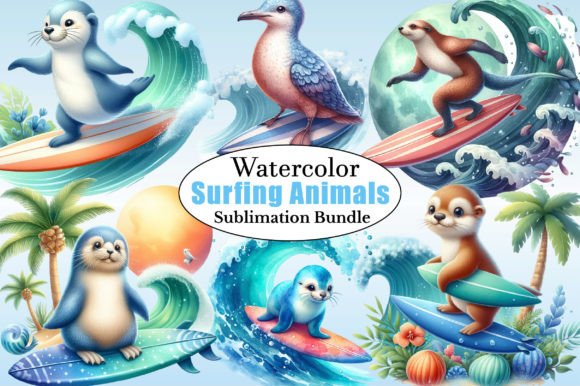
The immediate appeal of this Watercolor Safari Sublimation Clipart lies in its gentle, nursery-ready aesthetic. The color palettes typically associated with this style—sage greens, muted terracottas, and soft creams—are currently dominating the handmade product market. Unlike harsh vector art, the watercolor texture implies a level of artisanal quality that customers associate with high-end boutique items. As an embroidery designer, I see potential here not just for direct printing, but as a foundational layer for applique designs or complex fill stitch backgrounds.
The visual personality is undeniably sweet and gender-neutral, making it versatile for baby embroidery, personalized gifts, and toddler apparel. However, the "watercolor" aspect presents a unique challenge. In digital form, the bleeding edges look artistic; in machine embroidery design, undefined edges can look messy if not properly digitized or paired with the right fabric texture. The clipart feels less like a rigid logo and more like a decorative accent, suggesting it belongs on items where comfort and aesthetics take precedence over bold branding.
Real-World Application: The Custom Tote Bag Test
To truly evaluate this asset, I mentally placed it into a current client project: a series of custom canvas tote bags for a baby shower favor. Canvas is textured and absorbent, which interacts beautifully with watercolor aesthetics but poorly with tiny details. If I were using this Watercolor Safari Sublimation Clipart as a base for an embroidered patch or a combined print-and-stitch design, I would focus on the larger animal silhouettes rather than the fine background splashes.
For this tote bag design, the clipart serves as an excellent guide for thread color selection. Instead of trying to replicate the exact watercolor gradient with thousands of stitches—which increases stitch density and risks puckering—I would use the clipart to identify the dominant hues. A running stitch outline combined with a light fill stitch can mimic the watercolor effect without compromising the structural integrity of the bag. This approach maintains the handmade product feel while ensuring the finished product is durable enough for daily use. Customers buying these totes want the safari theme to be recognizable from a distance, not lost in a dense cluster of thread that makes the fabric stiff.
Performance Across Different Embroidery Projects
Versatility is key for any commercial embroidery business. These illustrations perform exceptionally well in specific niches but require adaptation in others.
- Baby Clothes and Onesies: The soft nature of the safari theme is perfect for infant wear. However, because baby skin is sensitive, you must keep stitch density low. Use the clipart as a placement guide for minimalistic satin stitch outlines rather than full-coverage fills.
- Sweatshirt Embroidery: Fleece and French terry fabrics have a pile that can swallow fine details. Here, the Watercolor Safari Sublimation Clipart works best when simplified. Bold shapes hold up better than intricate watercolor washes on textured knits.
- Nursery Decor and Pillows: This is the ideal application. Pillow covers allow for larger hoop sizes where the watercolor nuances can be appreciated. You can combine digital embroidery file formats with printed fabric panels to achieve the true watercolor look without excessive stitching.
- Holiday Embroidery: While safari isn't traditional holiday fare, the neutral tones work wonderfully for non-denominational winter gifts or "baby's first Christmas" ornaments where the focus is on the child rather than seasonal iconography.
Critical Constraints: Where to Exercise Caution
Despite its charm, this clipart collection has limitations that every maker must respect. The most significant risk involves small hoop sizes. Watercolor effects rely on blending and gradients, which are nearly impossible to replicate cleanly in a 4x4 hoop without losing definition. If you are working with limited hoop space, crop the design to focus on a single element rather than shrinking the entire composition.
Fabric choice is equally critical. Dark fabrics are generally unsuitable for standard watercolor-style embroidery unless you are using white underlay or bleaching techniques, as the pastel thread colors will vanish against black or navy. Stretchy fabrics like ribbed knits also pose a problem; the distortion caused by stretching can ruin the delicate alignment required to make watercolor-style stitching look intentional rather than accidental. Always use appropriate stabilizer—cut-away for stretchy garments and tear-away for stable wovens—to maintain registration.
Additionally, be wary of tiny lettering often included in illustration sets. Watercolor fonts rarely digitize well at small scales. If the clipart includes text, treat it as decorative art rather than readable copy, or replace it with a clean, legible embroidery font suitable for your target size.
Impact on Product Value and Customer Perception
Using high-quality Illustrations like this Watercolor Safari Sublimation Clipart elevates the perceived value of your work. In the saturated Etsy marketplace, buyers are drawn to cohesive aesthetics. When your sweatshirt embroidery, printable mockup, and packaging all share the same soft, professional visual language, it builds brand consistency and trust.
However, professionalism also means acknowledging the medium. A customer who receives a stiff, bulletproof vest-like embroidered area on a soft baby blanket will be disappointed, regardless of how pretty the digital file looked. By adapting the clipart intelligently—respecting stitch limits and fabric characteristics—you ensure the physical item matches the digital promise. This attention to detail drives repeat business and positive reviews, distinguishing your craft business from competitors who simply auto-digitize without testing.
Designer Notes for Successful Implementation
Before committing this Watercolor Safari Sublimation Clipart to a final product, follow these practical steps to ensure success:
- Test on Scrap Fabric First: Never assume a digital preview equals a physical result. Stitch out a sample on the exact fabric and stabilizer combination you plan to use for the final project.
- Check Thread Color Contrast: View your thread choices against the fabric in natural light. Watercolor shades can shift dramatically under different lighting conditions.
- Review Licensing Terms: Confirm whether the license allows for commercial embroidery, digital product resale, or only personal use. This is vital for Etsy sellers and those creating design assets for others.
- Verify File Compatibility: Ensure you have access to the correct digital embroidery file format for your machine. Do not assume universal compatibility across brands.
- Create Black and White Mockups: Test the design’s readability without color. If the image falls flat in grayscale, the contrast may be too low for effective stitching.
- Inspect Small Details: Zoom in to check for gaps or overlapping elements that could cause needle breaks or registration issues during high-speed stitching.
Ultimately, Watercolor Safari Sublimation Clipart is a beautiful resource for creative entrepreneurs willing to adapt it thoughtfully. It offers a shortcut to trending aesthetics but demands respect for the technical realities of textile decoration. By treating these illustrations as a starting point for customization rather than a rigid template, you can create personalized gifts and custom apparel that are as durable as they are delightful. Whether you are making an embroidered patch for a cap or a keepsake blanket, let the practical needs of the end-user guide your design decisions, ensuring your handmade products stand the test of time and washing machines alike.